The Architecture of Trust: How Smart Doorbells Transform Home Security
Update on March 18, 2026, 6:17 p.m.
In 1887, a patent was filed for a device that would let a homeowner speak to a visitor without opening the door. The inventor called it an “electric annunciator”—a precursor to what we now know as the intercom. The technology was crude by modern standards: a simple electrical circuit that rang a bell and, in some versions, allowed voice transmission through a wired connection. Yet the fundamental promise was revolutionary: the threshold between public and private space could now be mediated by technology.
Today, that promise has evolved into devices like the MENGQI-CONTROL Tuya Smart Doorbell, which combines high-definition video, two-way audio, motion detection, and smartphone connectivity in a single unit. But to understand why this matters, we need to look beyond the product specifications and examine the invisible architecture of trust that these devices construct.

The Architecture of the Threshold
Every door represents a negotiation between security and accessibility. Open it too readily, and you compromise safety. Keep it too fortified, and you isolate yourself from the community. This tension has shaped architectural design for millennia, from the guarded gates of ancient cities to the intercom systems of twentieth-century apartment buildings.

The smart doorbell doesn’t eliminate this tension—it transforms it. Where once we relied on a physical chain or a peephole, we now deploy cameras, microphones, and algorithms. The question becomes not “Do I open this door?” but “How do I want to manage the boundary between my private space and the public world?”
This shift reflects broader changes in how we conceptualize home security. The traditional model was reactive: an alarm sounds after an intrusion. The smart doorbell model is proactive: you see the delivery driver before they reach your porch, you speak to the solicitor without revealing that you’re home, you receive an alert when motion is detected at 3 AM. The perimeter of awareness has expanded.
The Science of Seeing: Motion Detection Technology
The most critical feature of any smart doorbell is its ability to detect and respond to movement. But not all motion detection is created equal. The technology has evolved through three distinct generations, each offering improvements in accuracy and power efficiency.

The first generation relied on Passive Infrared (PIR) sensors, which detect changes in heat signatures. When a warm body—human or animal—moves across the sensor’s field of view, it triggers an alert. PIR sensors consume minimal power, making them ideal for battery-operated devices. However, they cannot distinguish between a person, a passing car, or a swaying tree branch warmed by the sun. The result was often a flood of false notifications that trained users to ignore alerts entirely.
The second generation introduced pixel-based computer vision. These systems analyze video frames for changes in pixel patterns, offering better accuracy than PIR alone. But they still struggled with environmental factors—shadows, rain, and lighting changes all triggered false positives.
The third generation, now appearing in premium smart doorbells, uses artificial intelligence to analyze what the camera sees. Instead of merely detecting motion, the system asks: Is this a person? A package? A vehicle? An animal? By filtering alerts based on object classification, these systems reduce false positives by 70 to 90 percent, according to industry research. The user receives meaningful notifications rather than digital noise.
The Two-Way Audio Revolution
The intercom component of smart doorbells traces its lineage back to the late nineteenth century, when Alexander Graham Bell and Thomas Edison experimented with early communication systems using telegraph wires. These pioneering devices were not security tools but communication aids—ways to speak between rooms in large houses or between floors in early office buildings.

The modern two-way audio system serves a different purpose. It allows homeowners to speak with visitors from anywhere in the world, as long as they have an internet connection. The implications extend beyond convenience: a homeowner on vacation can instruct a delivery driver where to leave a package, can deter a potential burglar by speaking through the device, can welcome a friend while stuck in traffic.
The technology behind this capability involves sophisticated audio processing. Echo cancellation ensures that the speaker’s voice doesn’t feed back through the microphone. Noise reduction algorithms filter out wind, traffic sounds, and other environmental interference. The result is a conversation that feels surprisingly natural, despite occurring between a tiny speaker and a microphone mounted beside a front door.
The Ecosystem Question: Integration and Interoperability
A smart doorbell exists within a broader ecosystem of connected devices. The MENGQI-CONTROL doorbell integrates with the Tuya Smart platform, which connects to hundreds of other devices—lights, locks, sensors, thermostats. This integration transforms the doorbell from a standalone security device into a node in a larger smart home network.
When the doorbell detects motion, it can trigger other actions: turn on the porch light, start recording to the cloud, send a notification to multiple family members, activate a siren. The intelligence moves from the device to the ecosystem, creating possibilities that extend far beyond what any single product could accomplish.
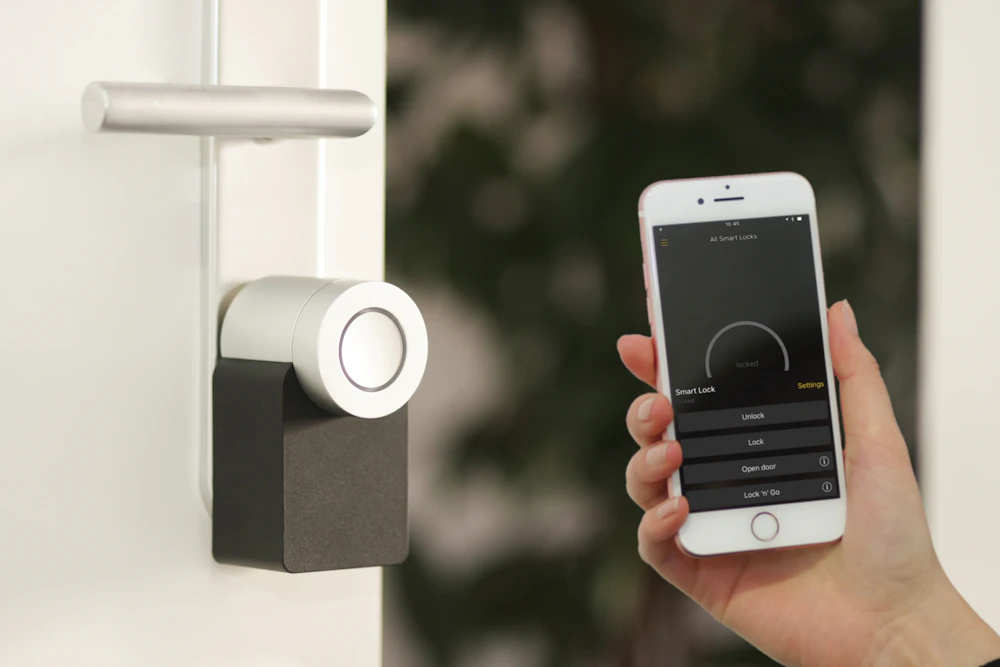
This ecosystem approach also raises questions about data privacy and platform dependence. Video from smart doorbells is typically stored in the cloud, where it may be accessed by the service provider. Different platforms have different policies regarding data retention, law enforcement requests, and third-party sharing. The convenience of a connected ecosystem comes with trade-offs that each consumer must evaluate.
The Economics of Perimeter Security
The smart doorbell market has grown dramatically, with global intercom and access control industries valued at $33.4 billion in 2025 and projected to reach $75.6 billion by 2032. This growth reflects several converging factors: declining hardware costs, improved wireless infrastructure, rising concerns about package theft, and the broader adoption of smart home technology.
For homeowners, the value proposition is straightforward: a smart doorbell provides security monitoring, package protection, and convenience for a one-time hardware cost plus optional cloud storage fees. Compared to traditional security systems that require professional installation and monthly monitoring contracts, smart doorbells offer a low-barrier entry point into home security.

The economics also favor renters, who previously had limited options for security upgrades. Battery-powered smart doorbells require no wiring and can be removed when the lease ends. This portability has expanded the market beyond homeowners to apartment dwellers, college students, and anyone in temporary housing.
The Human Factor: Behavior and Trust
Technology alone cannot create security. The most sophisticated doorbell camera accomplishes nothing if its alerts are ignored, if its recordings are never reviewed, if its two-way audio is never used. The human factor remains the critical variable.
Research in security psychology suggests that visible security measures—cameras, alarm signs, smart doorbells—create a deterrent effect. Potential intruders, seeing evidence of monitoring, may choose easier targets. But this deterrent effect depends on the perception of active monitoring, not just the presence of a device.
This creates an interesting paradox: the device that promises effortless security actually requires ongoing engagement to deliver on that promise. Users must configure motion zones, adjust sensitivity settings, review recorded clips, respond to alerts. The smart doorbell reduces some burdens while introducing others.
The MENGQI-CONTROL Tuya Smart Doorbell, with its motion detection, two-way audio, and smartphone integration, represents a particular moment in this technological evolution. It offers capabilities that would have seemed like science fiction to those early intercom inventors in the nineteenth century. Yet it also embodies the same fundamental question that has always animated threshold security: How do we balance openness with protection, accessibility with privacy?
The technology has changed. The question remains.


