Hydrodynamic Sound: Why Bone Conduction Reigns Supreme in the Water
Update on Jan. 4, 2026, 9:21 p.m.
In the audiophile world, Bone Conduction is often viewed as a compromise—a technology that sacrifices fidelity for situational awareness. The bass is weak; the treble rolls off. However, this assessment changes the moment you submerge. Beneath the surface, the physics of sound flip, and Bone Conduction transforms from a compromise into a superpower.
To understand this metamorphosis, we must look at Acoustic Impedance and the nature of sound propagation in liquids vs. gases. Devices like the AOSMAN AS29 Swimming Headphones are not just “waterproof headphones”; they are instruments tuned for a different medium entirely.

The Problem with Air Conduction Underwater
Traditional earphones (in-ear or over-ear) rely on pushing air. The driver vibrates, moving air molecules, which strike the eardrum.
When you swim:
1. Water Blockage: Water fills the outer ear canal, blocking the path of air. Or, if you seal the ear with a bud, the pressure changes can be painful.
2. Impedance Mismatch: Sound traveling from the air (inside a waterproof headphone cup) to the water (surrounding it) to the flesh (your head) loses massive amounts of energy at each boundary. This is due to the difference in density (impedance) between the mediums. It creates a muffled, distant sound.
The Bone Conduction Advantage
Bone conduction bypasses the ear canal entirely. It vibrates the cheekbone, sending waves directly to the cochlea.
Why it works better underwater:
* Density Match: The human body is roughly 60% water. Our bones and tissues have an acoustic impedance much closer to water than to air.
* Direct Coupling: When the AOSMAN AS29 vibrates against your skull underwater, the water surrounding it acts as a transmission medium rather than a barrier. The sound waves travel seamlessly from the water/device interface into the skull.
In fact, many swimmers report that bone conduction headphones sound better underwater than in air. The water provides a damping effect that can smooth out the vibration, and the “sealed” environment (especially if wearing earplugs) enhances the perception of bass frequencies via the Occlusion Effect.
The Ergonomics of Drag
Swimming is a battle against drag. Any object attached to the head must be hydrodynamic.
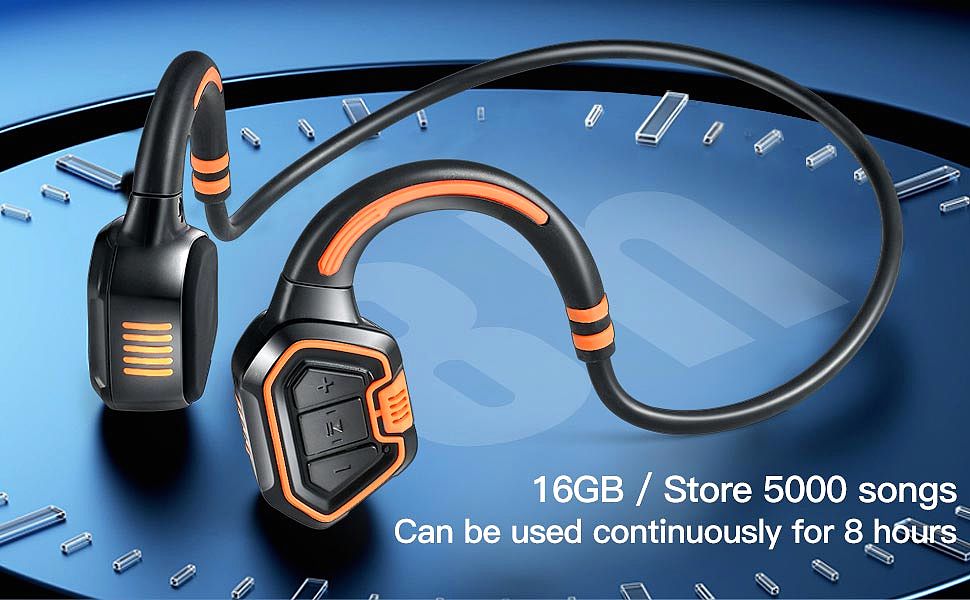
The Open-Ear design of the AS29 is functionally superior here. Large over-ear cups would act like water brakes, ripping off the head during a flip turn or a dive.
The sleek, low-profile titanium frame of bone conduction headsets slices through the water. At 29 grams, it adds negligible mass. The security comes from the clamping force of the titanium band, often augmented by the friction of a silicone swim cap.
The Safety of Open Ears (Even Underwater)
Even in a pool, situational awareness matters. You need to hear the lifeguard’s whistle, the splash of a swimmer in the next lane, or the coach’s instructions.
Because bone conduction leaves the ear canal open (unless you choose to plug it), you retain access to these environmental sounds. It layers the music over the reality of the pool, rather than replacing it.
Conclusion: The Aquatic Symphony
The underwater world is a unique acoustic environment. It is dense, resonant, and isolating.
The AOSMAN AS29 leverages bone conduction to turn the swimmer’s own skull into the listening room. By aligning the technology with the physics of the medium, it delivers an audio experience that is robust, clear, and surprisingly immersive—proving that sometimes, the best way to hear is to feel.