Beyond the Box: 3 Creative Uses for Truly Flexible Solar Panels
Update on Oct. 26, 2025, 11:27 a.m.
Beyond the Box: 3 Creative Uses for Truly Flexible Solar Panels
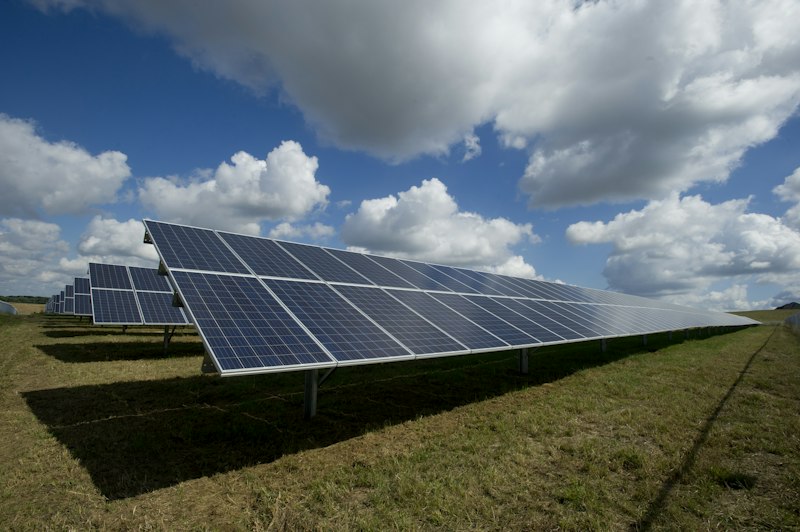
For decades, the image of solar power has been a rigid, flat, glass-and-metal rectangle. It’s a box we put on another box (our homes or RVs). This image has shaped our thinking, limiting our perception of where and how we can generate power. But what if solar power could be unrolled like a yoga mat, wrapped like fabric, or molded like clay?
Thanks to advancements in CIGS thin-film technology, this is no longer a futuristic dream. With panels that are genuinely 360-degree flexible, incredibly lightweight, and durable enough to withstand constant movement, the rigid box has been broken. The new frontier isn’t about finding more flat surfaces; it’s about integrating power generation seamlessly into the objects and passions that define our lives.
Let’s explore three concepts that show what becomes possible when solar power breaks free.

Case Study #1: The Wanderer’s Power Source
Maya is a freelance photographer and a true digital nomad. Her office is wherever her camera takes her, from the bustling streets of Tokyo to the remote trails of Patagonia. Her challenge has always been power. Laptops, cameras, drones, and phones all compete for the limited capacity of her portable power banks.
Her solution: a custom-built “smart” backpack. She took a durable canvas rucksack and, working with a local tailor, integrated a long, narrow strip of a CIGS flexible solar panel directly onto the top flap. The panel is so thin and light it’s barely noticeable, and its flexibility allows it to follow the natural curve of the bag. Even as the backpack is thrown into overhead bins or dropped on the ground, the CIGS material’s resilience to microcracks means it keeps on working. As she wanders, the panel silently trickles charge into a slim power bank nestled in a dedicated sleeve inside, ensuring her essential gear is always topped up.
The Spark of Reality: In her design sketch, Maya noted the key components. A wire from the panel runs through a reinforced grommet into the bag, connecting to a tiny, matchbox-sized MPPT solar charge controller. This controller efficiently manages the power flow into a 10,000mAh lithium-polymer power bank, providing a constant, reliable source of USB power for her devices.
Case Study #2: The Living Sculpture
Leo is an installation artist who creates work for outdoor festivals like Burning Man. He is fascinated by creating art that interacts with its environment. His latest piece is a series of large, twisting, flower-like sculptures that dot the desert landscape. He wanted them to feel alive, to “breathe” with light as day turns to night.
The problem was running power to a dozen sculptures across a wide-open space. The answer was to make the sculptures self-powering. Leo used wide CIGS flexible panels as the literal “skin” for the sculptures’ petals. The ability to bend and even twist the panels allowed him to create beautiful, organic curves that would be impossible with rigid panels. During the day, the petals soak up the intense desert sun. As dusk falls, a sensor triggers the stored energy, and a soft, pulsing glow emanates from within each sculpture, powered by the very sunlight they absorbed.
The Spark of Reality: Leo’s workshop notes show each sculpture contains a small 12V deep-cycle battery at its base. The CIGS panels are wired to a simple charge controller, which in turn feeds the battery. The lighting effects are managed by a programmable Arduino microcontroller that drives strips of low-power LEDs, allowing him to create the mesmerizing “breathing” effect.

Case Study #3: The Navigator’s Lifeline
Chloe is an avid sea kayaker who undertakes multi-day expeditions along remote coastlines. For her, power isn’t a convenience; it’s a lifeline. Her GPS, VHF marine radio, and bilge pump are critical safety equipment. Keeping them charged on the open water used to involve carefully rationing power from a heavy, sealed battery.
Her game-changing upgrade was to permanently affix a CIGS flexible solar panel to the curved front deck of her kayak. She chose a model that was long and tapered, perfectly matching the boat’s shape. Using a marine-grade adhesive, she bonded it directly to the fiberglass. The panel is so low-profile it doesn’t catch the wind or interfere with her paddle strokes. Its IP68 waterproof rating means it’s unfazed by saltwater spray or even a complete rollover. Now, as she paddles through the day, the sun provides a constant charge to a small, waterproof battery box, giving her the confidence to explore further and stay out longer, knowing her safety net is always being replenished.
The Spark of Reality: Chloe worked with a marine electrician to ensure a robust setup. The panel’s wires run through a waterproof deck gland to a small, high-efficiency MPPT controller inside a sealed box. This controller charges a compact 12V LiFePO4 battery, which provides stable power to her devices via waterproof USB and 12V sockets.
The Only Limit is Your Blueprint
From a photographer’s backpack to an artist’s sculpture to a kayaker’s deck, these stories share a common thread: the physical constraints of solar power are dissolving. The technology is no longer the limitation. It has become a new, flexible medium for creativity and problem-solving.
So, the question is no longer “Where can I fit a solar panel?” The question is now, “What will you create with it?”