The Swimmer's Silence: Why Bluetooth Fails Underwater and How Engineers Solved It
Update on Oct. 21, 2025, 11:26 a.m.
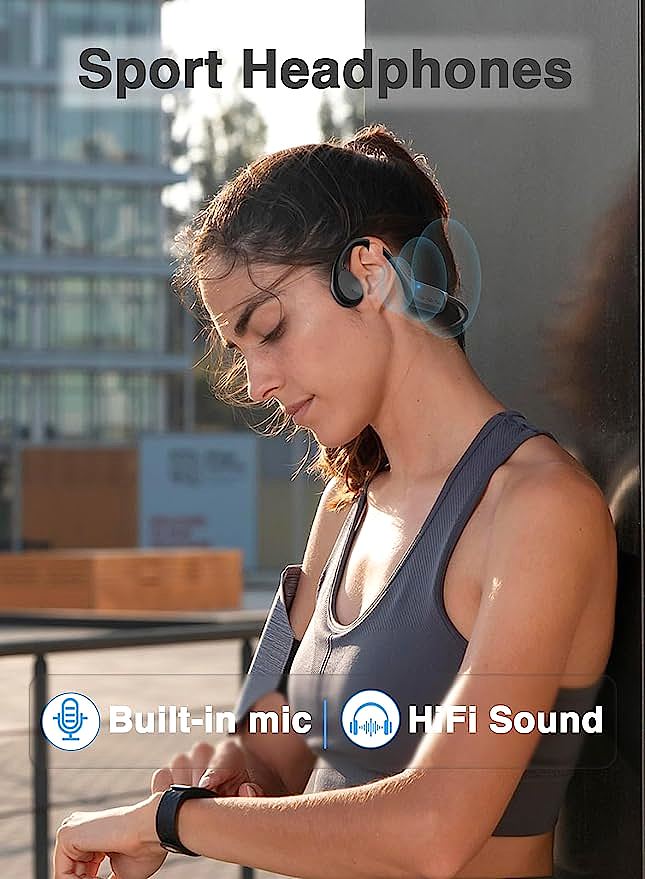
For any runner or cyclist, audio is a double-edged sword. A driving playlist can push you through the pain of the last mile, but traditional earbuds seal you off from the world, creating a dangerous bubble of isolation. You can’t hear the electric car silently approaching from behind, the cyclist shouting “On your left!”, or the distant rumble of changing weather. This is why open-ear headphones, particularly those using bone conduction technology, have become so crucial for land-based sports. They deliver your audio without blocking your ears, allowing for total situational awareness.
This open-ear freedom is a game-changer on the pavement, a simple choice for safety. But what happens when you trade the bike path for the swimming lane? Here, the challenge shifts from a choice about awareness to a fundamental battle with the laws of physics. And the first casualty of that battle is your Bluetooth connection.
The Plunge Into Silence
You’ve likely experienced it. You buy a pair of premium, IP68-rated waterproof headphones. They work perfectly in the rain or the shower. You pair them with your phone, leave it by the poolside, and dive in. The moment your head submerges, the music sputters and dies. The silence that greets a swimmer a few inches below the surface isn’t a fault of your expensive headphones. It’s a hard stop imposed by nature.
To understand why, we need to look at the invisible world of radio waves. Bluetooth, like Wi-Fi, operates in the 2.4 gigahertz (GHz) frequency band. This is a form of microwave radiation on the electromagnetic spectrum. These waves travel through the air with ease, but they have a critical vulnerability: water. Water molecules, particularly the oxygen atom within H₂O, are exceptionally good at absorbing the energy of 2.4 GHz radio waves.
Imagine trying to shout to a friend through a thick, dense concrete wall. That’s essentially what a Bluetooth signal tries to do when faced with water. The signal strength decays exponentially, a process called attenuation. Within just a few inches, the water has absorbed so much of the signal’s energy that it becomes unintelligible noise for the headphone’s receiver. For context, while a very long-wave radio signal (VLF) can penetrate hundreds of feet into the ocean to communicate with submarines, the short-wave, high-frequency signal of Bluetooth is stopped dead in its tracks.
The Engineer’s Gambit: If You Can’t Go Through, Go Around
So, if beaming music through water from a poolside device is a non-starter, how do you get a soundtrack to your swim? Engineers, faced with an insurmountable physical wall, did what they do best: they didn’t try to break through it; they built a door.
This “door” is the built-in MP3 player.
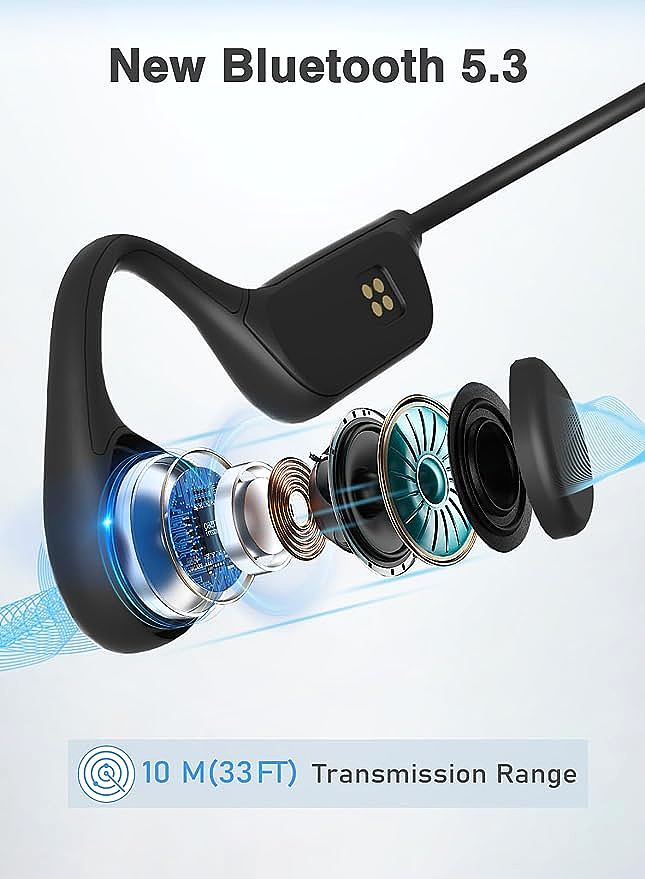
Devices designed specifically for swimming, like the Hamuti X7, incorporate a significant amount of solid-state memory—in this case, 32GB—directly into the headset. This transforms the headphones from a simple wireless receiver into a self-contained, waterproof audio player. The reliance on a fickle underwater Bluetooth connection is eliminated entirely.
The process is a throwback to the pre-streaming era, but it’s born of pure necessity. You connect the headphones to a computer via a magnetic USB cable and simply drag and drop your music files onto the device, just like a classic MP3 player or a USB flash drive. The music is now stored locally. When you switch the headphones to “MP3 mode,” the audio source is no longer your phone across the pool; it’s the memory chip sitting right there in the headset. The signal path is reduced to a few inches of internal wiring, completely shielded from the signal-killing properties of water.
A Design Born from a Problem
This is a perfect example of purpose-driven engineering. The inclusion of an MP3 player isn’t a fun bonus feature; it’s the core component that makes the product viable for its intended primary use. The IP68 waterproof rating gets you into the pool, but it’s the onboard memory that lets you actually do anything once you’re there.
It’s a reminder that in the world of technology, the most elegant solution is often the one that respects physical limitations rather than trying to defy them. For athletes on the road, open-ear design provides a safe harmony with the environment. For athletes in the water, it’s the humble, reliable MP3 file that breaks the silence, turning a monotonous workout into a rhythmic escape.