Hunting Energy Vampires: The Hidden Heat That's Costing You Money
Update on Oct. 21, 2025, 10:46 a.m.
It’s 2 AM. You walk into your dark living room for a glass of water and you notice something odd. The wall behind your entertainment center feels… warm to the touch. The TV is off. The game console is off. The soundbar is off. Everything is sleeping. Or is it?
What you’ve just discovered is evidence of a silent freeloader living in your home. It’s a phenomenon experts call “phantom load” or, more evocatively, “vampire power.” It refers to the electricity consumed by your appliances even when you think they are turned off. And this isn’t a trivial amount. According to the U.S. Department of Energy, this vampire power can account for as much as 10% of your monthly electricity bill.
The problem is, this energy drain is completely invisible. But what if you could see it? What if you could see the energy being wasted, not as an abstract number on a bill, but as a real, tangible glow? This is where the concept of thermal imaging comes into play. Because of one fundamental law of physics—all energy consumption produces heat—a thermal camera can turn your home into a hunting ground, and you into an energy vampire hunter.
Turning On Your “Heat Vision”
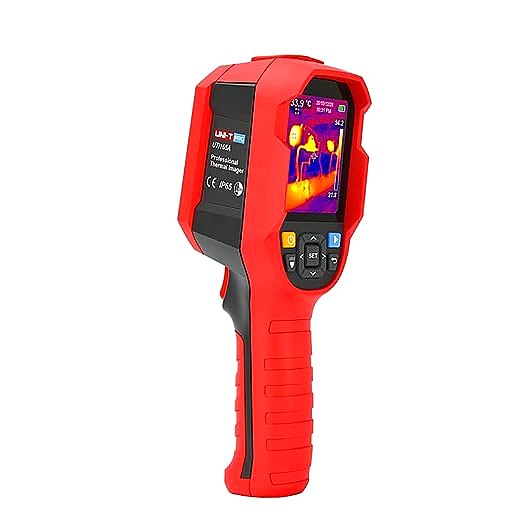
You don’t need to be a scientist to understand this. Think of it like a detective’s UV light revealing hidden stains. A thermal imager, like the pocket-sized UNI-T UTi165A, reveals hidden heat. Even a tiny power draw of a few watts, sustained over hours, will make an appliance slightly warmer than its surroundings. A sensitive thermal camera can easily detect this temperature difference, as little as 0.15°C.
Suddenly, the invisible becomes visible. That “off” television set glows with a faint warmth. The power adapter for your phone charger, plugged into the wall with nothing attached, radiates a soft heat. These are your energy vampires, caught in the act.
Your Home’s Most Wanted: A Vampire Hit List
Ready to go on a hunt? Here are the most common lairs for energy vampires in a typical home.
1. The Entertainment Center Lair: This is the vampires’ nest.
* Modern TVs: They are never truly off. They are in a standby state, waiting for a signal from your remote.
* Cable/Satellite Boxes: These are notorious energy hogs, often consuming nearly as much power in standby as when they’re active. They’re constantly updating guides and preparing to record.
* Game Consoles: Features like “Instant On” mean your console is continuously sipping power to download updates and be ready at a moment’s notice.
* Soundbars & Receivers: Similar to TVs, they wait in a low-power state for a signal.
Point a thermal camera here, and you’ll see a constellation of glowing rectangles, all wasting energy while you sleep.
2. The Home Office Hideout:
* Desktop Computers & Monitors: Even in “sleep” mode, they draw power to keep RAM active.
* Printers: Especially wireless ones, which need to maintain a network connection.
* Routers & Modems: These are on 24/7 by design, but it’s good to be aware of the heat (and energy) they constantly produce.
3. The Kitchen Corner:
* Microwave Ovens: That convenient digital clock? It requires constant power.
* Coffee Makers: Many modern coffee makers with clocks or “keep warm” features are always drawing a small current.
4. The Ubiquitous Wall Warts:
These are the small power adapters for everything from your phone to your electric toothbrush. The transformer inside them consumes energy just by being plugged in. Go feel one that’s been plugged in for a while without charging anything. It’s warm. That warmth is the feeling of your money trickling away.
The Real Cost of a Little Warmth
A single device drawing 5 watts in standby doesn’t sound like much. But let’s do the math.
5 Watts * 24 hours/day * 365 days/year = 43,800 Watt-hours = 43.8 kWh
If you have 10 such devices (a very conservative estimate), that’s 438 kWh per year. At an average U.S. electricity rate of $0.17 per kWh, you are paying over $74 every year for appliances you aren’t even actively using.
The Silver Bullet for Slaying Vampires
So how do you fight back? The solution is beautifully simple and low-tech. You don’t need a fancy smart home. You need a power strip with an on/off switch.
Group your entertainment center devices (TV, console, soundbar) onto one power strip. When you’re done for the night, you don’t turn off each device individually. You hit the single switch on the power strip. This physically disconnects them from the circuit. It’s the equivalent of driving a wooden stake through the vampire’s heart. The flow of phantom power is completely cut off. Do the same for your computer and its peripherals.
Conclusion: Become the Energy Manager of Your Castle
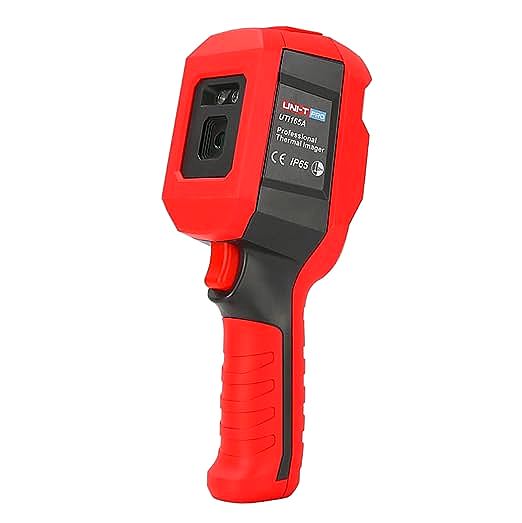
You don’t need to buy a thermal imager to start hunting energy vampires (though it makes it a lot more fun). The principle is what matters. Start thinking about your home in a new way. “Off” doesn’t always mean off. That faint warmth is a clue.
By being mindful of these hidden loads and using simple tools like power strips, you can take back control of your electricity bill. You become the active manager of your home’s energy, not just a passive consumer. And that’s a powerful feeling.